ArpLog — ERP for BLI Kft.'s rail transhipment and customs terminal in Tuzsér
One shared system instead of per-supplier spreadsheets, from each wagon's journey to management reports
- YEAR
- 2026
- CATEGORY
- Software
- STATUS
- LIVE
- CLIENT
- BLI Kft.
- TECHNOLOGY
- Python, Flask, Waitress, SQLite, JavaScript
The starting point
BLI Kft.'s terminal in Tuzsér tracked rail freight in separate Excel workbooks for each supplier. Each row followed one wagon from arrival at the border through shunting, unloading and customs declaration to pulling out the empty wagon. The workbooks had headers that changed from year to year, merged cells and gross/tare/net weights in a single cell, so management reports needed a lot of manual work and reliable totals were hard to produce. The goal was faster, more reliable data entry, and reports that spreadsheets cannot provide.
What we built
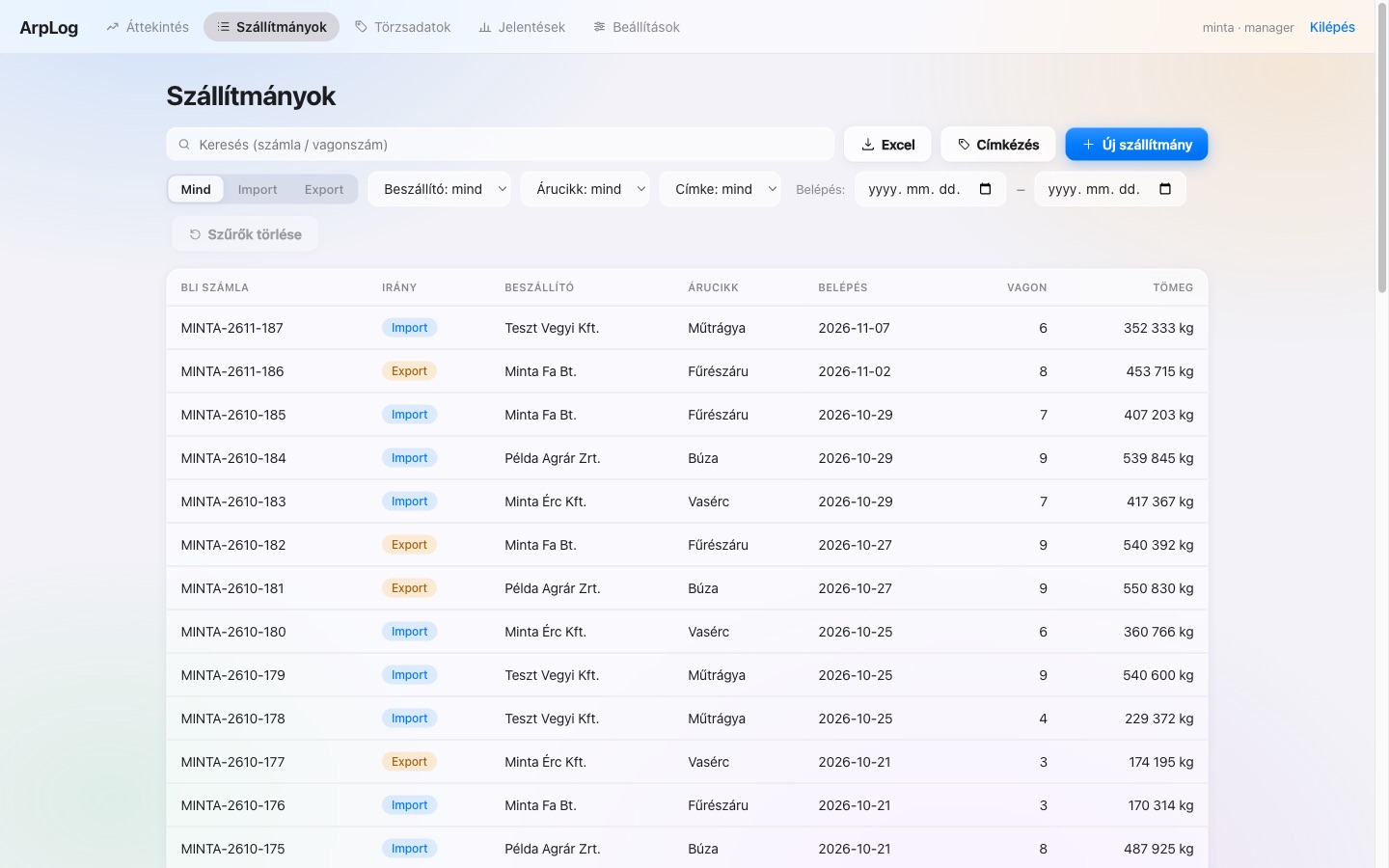
- Shipments: an invoice-number header with the wagons, tank wagons or trucks below it. Filtering, search, and entry with live counts and tonnage.
- Checks during entry: the rail wagon number (UIC) including its check digit, and a warning for repeated invoice numbers.
- Master data: suppliers, goods with customs tariff codes, railway companies.
- Excel import: loading previous years' workbooks, handling header differences and merged cells. Every skipped row is logged; nothing disappears silently.
- Reports: tonnage by supplier, goods, railway company, direction and month, with drill-down, year×month comparison, CSV and Excel export.
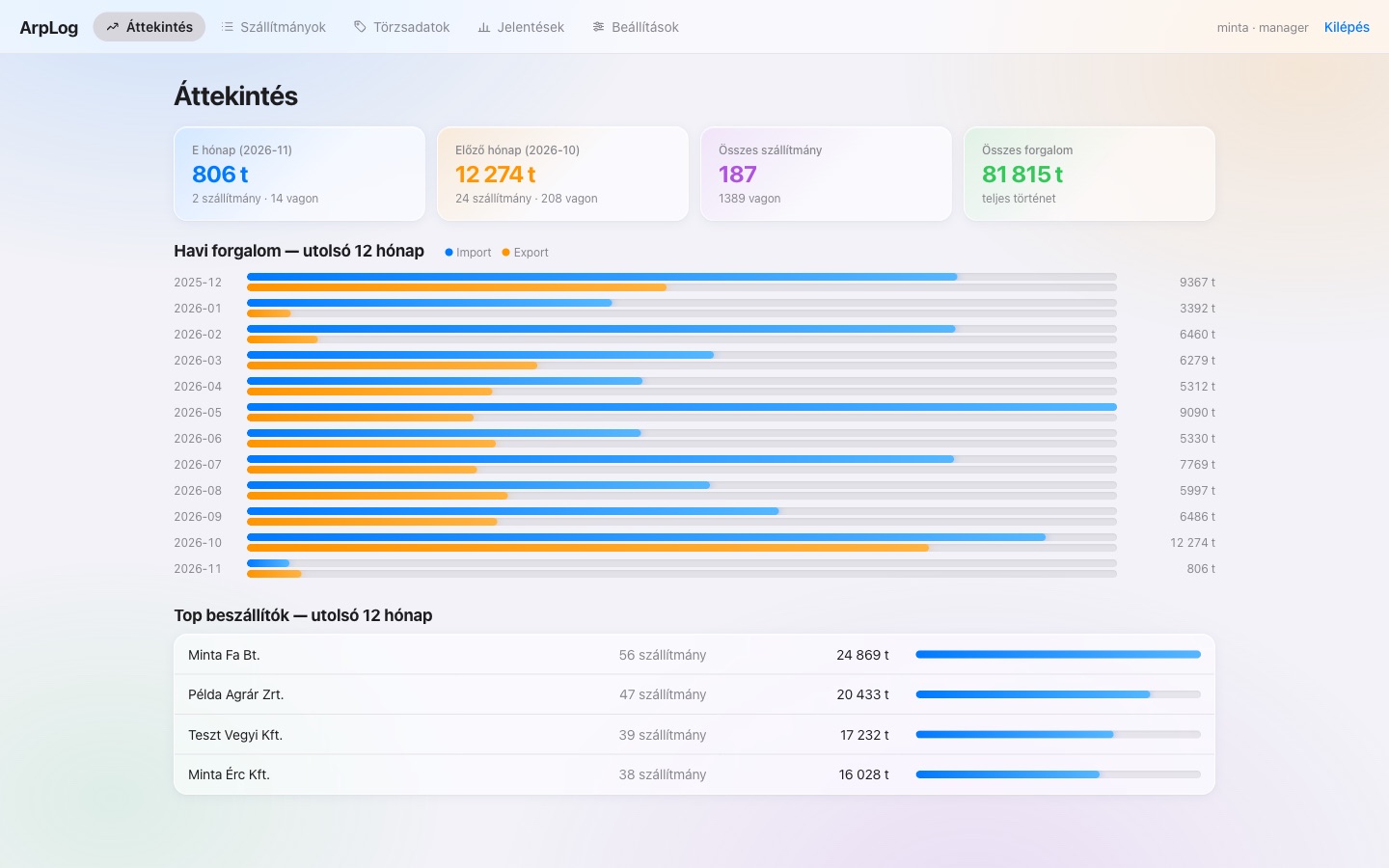
- Management overview: 12-month import/export trend, key figures, largest suppliers.
- Data quality panel: invalid dates, repeated invoices, missing weights, shipments without wagons.
- Attachments and photos: documents per shipment, on-site photos from the phone camera, a mobile-optimised interface for entry by the track.
- Printable shipment sheet with signature lines, tags, automatic daily backup.
- Roles: operators enter data; managers run reports, import and manage users; every change goes to an audit log.
Integrations and technology
Python, Flask and Waitress on the server, an SQLite database, and a JavaScript interface with no build step, in light and dark mode. The system runs on the terminal's own server as a Windows service. Updates run from a script with a mandatory automatic backup first and a documented rollback procedure. 175 automated tests check it.
How it went
Development started on 4 July 2026 with a written design and went through five phases: foundations and permissions, shipments, Excel import, interface, then reports and backup. The first complete version was ready in two days. On 6 July ten more features followed (Excel export, print sheet, data quality, mobile view and others), and on 8 July the system went live on the terminal's server, together with the historical data.
Where it stands
Live since 8 July 2026. Next steps: invoicing, a lead-time report and some special supplier workflows.